
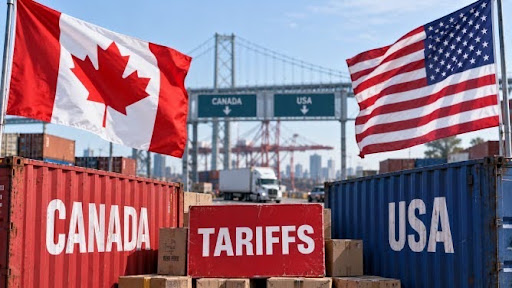
In a significant escalation of trade tensions, Canada has enacted retaliatory tariffs on a wide range of American imports valued at billions of dollars. Implemented at the stroke of midnight on Tuesday, these tariffs range from 15% to 50% and affect approximately $20 billion worth of goods imported from the United States. The targeted categories encompass steel, dairy products, appliances, agricultural machinery, pulp and paper, and electronics.
This move by Canada comes as a direct response to the United States’ decision to impose a 50% tariff on an equivalent $20 billion of Canadian goods. Canadian Prime Minister Mark Carney has emphasized that the country will intensify its efforts to lessen economic reliance on its southern neighbor by seeking to bolster trade connections with other nations.
The US administration, led by President Donald Trump, has also imposed its own set of tariffs on Canadian commodities, which include cars and raw materials. The US tariffs, which affect products like hockey sticks and cement, cover about 5.5% of Canadian exports to the United States. President Trump has accused Canada of exploiting the US economically, further straining the diplomatic ties between the two countries.
Beyond the trade standoff, relations between Canada and the United States have soured, with disputes spilling over into broader diplomatic arenas. Among the contentious issues is Trump’s threat to curtail the US sales of Canadian aircraft manufacturer Bombardier unless the company relocates more of its manufacturing operations to the United States.
The trade talks between the two nations collapsed in August after negotiations failed to yield a consensus, with Canadian officials pointing to new US demands and restrictions considered unacceptable by Ottawa. As the conflict persists, both countries remain at odds over the future of their trade relationship.