
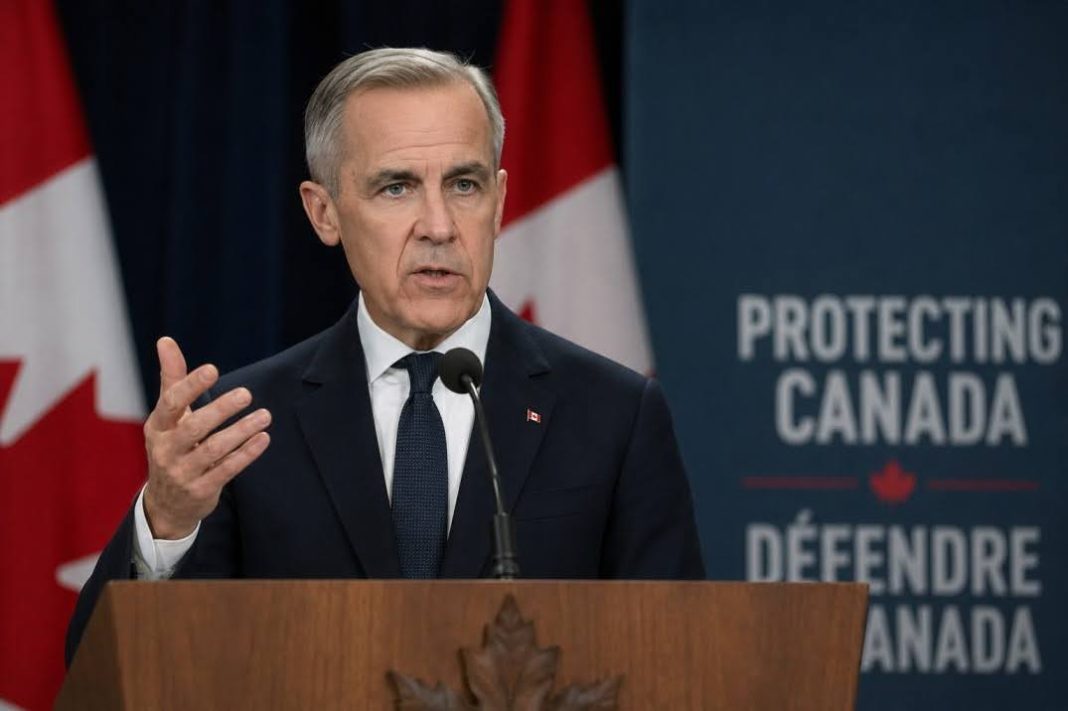
In a pointed critique, Canadian Prime Minister Mark Carney has urged the Trump administration to abandon its derisive tone and engage in serious trade discussions, as Canada prepares to implement retaliatory tariffs on American products. Carney condemned the disparaging remarks aimed at Canada, emphasizing that such behavior did not reflect the dignity expected from high-ranking officials. He stressed that meaningful trade negotiations could only advance if the U.S. moved beyond superficial rhetoric and memes, opting instead for substantive discourse.
The discord between the two nations has been escalating, notably after President Trump authorized a controversial name change for Lake Ontario, dubbing it “Lake America,” a decision met with strong disapproval in Canada. The primary U.S. trade representative has downplayed the potential consequences of the trade conflict, asserting that Canada would bear the brunt of the economic impact and noting that no active negotiations were occurring. This tension follows the breakdown of trade talks between the U.S. and Canada approximately a week ago, which led to the U.S. imposing steep 50% tariffs on $20 billion worth of Canadian imports. In a tit-for-tat response, Canada announced its own set of tariffs on an equal value of U.S. goods, scheduled to begin on September 8, likely affecting consumers on both sides of the border.
The U.S. trade representative attributed the negotiation collapse to what he viewed as unreasonable Canadian demands, such as reducing taxes on heavy-duty trucks, which he claimed impeded progress. He further suggested that Canada might not be genuinely interested in reaching an agreement, hinting at potential reciprocal actions if Canada moved to restrict American products and services. Conversely, Canadian officials have pointed to internal uncertainties within the White House about the leadership of the negotiations as a significant issue. Carney also highlighted that U.S. negotiators had treated Canada’s protections for the French language as contentious, despite these being well-established rights, particularly in Quebec.
President Trump has framed the trade dispute as a result of Canada’s desire for the benefits of close ties with the U.S. without formal integration, accusing Canada of long-standing heavy tariffs on American agricultural goods. The U.S. trade representative admitted to confusion over the specifics of what was under negotiation, questioning whether the impasse was due to political or economic reasons, but maintained that a middle ground between existing tariffs and completely duty-free trade was not considered realistic.