
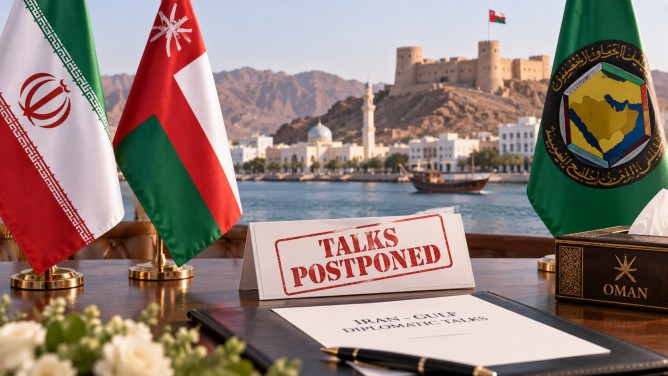
A meeting that was to bring together Iran and Gulf nations in Oman has been put on hold after several regional countries requested a delay. The decision to postpone the gathering was reportedly a mutual one between Tehran and Muscat. Although Iranian officials have not disclosed which countries sought the deferral, it has been confirmed that Omani Foreign Minister Badr Albusaidi announced the delay of the meeting, originally scheduled to take place in Salalah. Albusaidi highlighted that the postponement was intended to foster regional consensus and reiterated Oman’s commitment to dialogue aimed at enhancing stability and long-term cooperation.
The discussions were anticipated to address various regional concerns, including potential arrangements for maritime navigation through the Strait of Hormuz. This waterway is a crucial artery for global oil shipments, and any disruption in its traffic could have significant implications for international energy markets. Iran and Oman have been engaged in bilateral talks to establish protocols for managing vessel movements through this strategic passage. With Oman controlling the coastline on the opposite side of the strait, these discussions have reportedly garnered support from other Gulf Arab states as well.
The delay in the meeting occurs against a backdrop of heightened tensions in the region. The Strait of Hormuz is one of the world’s most vital oil transit routes, and its smooth operation is essential for maintaining the global energy supply chain. Any negotiation concerning its navigation is therefore of paramount importance not only to the countries in the region but also to international stakeholders dependent on its oil flow.
Previously, Oman has played a mediating role in the region, often facilitating dialogue and cooperation. Its involvement in these talks underscores its strategic position and diplomatic influence in the Persian Gulf. Despite the postponement, the intention to resume discussions at a later date reflects a shared interest among regional parties in addressing common challenges and securing the stability of this key maritime corridor.