
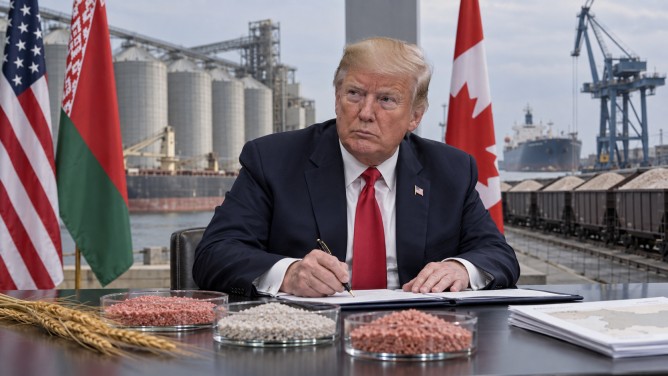
As tensions rise between the United States and Canada over trade issues, Washington is exploring alternative sources for critical imports. Among the focal points is potash, a key component for fertilizer production, which the U.S. currently imports primarily from Canada. In light of the ongoing trade dispute, President Donald Trump has announced efforts to negotiate a significant deal with Belarus for the purchase of potash, potentially reducing American reliance on Canadian supplies.
The proposed agreement with Belarus could provide U.S. farmers and ranchers with potash at a more competitive price than what is currently available from Canadian sources, according to President Trump. This development comes at a time when the United States is seeking to expand its trade partnerships and reduce dependencies amid strained relations with Canada.
This strategic move also aligns with the Trump administration’s broader initiative to improve diplomatic ties with Belarus, a nation that has historically aligned closely with Russia. Recently, the U.S. eased some sanctions on Belarus following the release of political prisoners, signaling a warming of relations that may facilitate the potash deal.
However, any potential agreement with Belarus is not without its complexities. While the U.S. seeks to capitalize on lower potash prices, Belarusian President Alexander Lukashenko’s government remains under international scrutiny for its treatment of political opponents. Additionally, Belarus faces Western sanctions due to its support for Russia amidst the ongoing conflict in Ukraine, adding a layer of geopolitical tension to the potential trade deal.
The implications of a U.S.-Belarus potash agreement could be significant, affecting both the agricultural sector’s cost dynamics and the broader diplomatic landscape. As negotiations progress, the potential shift in trade partnerships underscores the intricate interplay of economic and political interests on the global stage.