
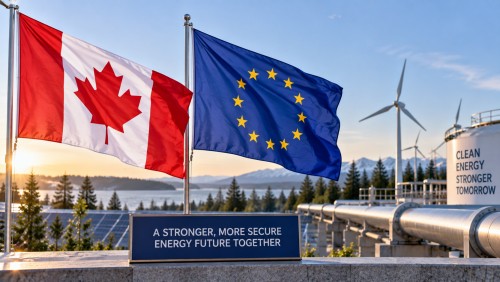
As Europe seeks to diversify its energy sources and reduce dependence on Russian supplies, Canada and the European Union are considering a closer partnership to bolster energy security. This potential collaboration comes amid ongoing geopolitical tensions and Europe’s urgent need to stabilize its energy provisions.
During a recent visit to Strasbourg, Canadian Prime Minister Mark Carney engaged with EU leaders to explore deepening economic and strategic ties, focusing on Canada’s abundant oil and natural gas resources. While Canada possesses significant export infrastructure on its West Coast, the lack of direct energy export facilities on the eastern coast poses a logistical challenge for direct shipments to Europe.
One innovative solution under discussion is the implementation of energy swap agreements. These agreements would allow Canadian energy meant for Asian markets to be exchanged with supplies heading to Europe. This strategy would facilitate Canadian energy access for European buyers without necessitating direct transatlantic shipments, thus bypassing current infrastructure limitations.
Beyond fossil fuels, the proposed partnership aims to encompass the supply of critical minerals essential for Europe’s transition to clean energy. Canada’s contribution could play a significant role in supporting the EU’s development of renewable energy technologies and other low-carbon solutions.
The potential cooperation between Canada and the EU highlights a multifaceted approach to energy trade, combining traditional resources with a focus on sustainable energy development. As both regions seek to fortify their economic and energy ties, this collaboration could pave the way for a more secure and sustainable energy future for Europe.