
As global trade dynamics shift and geopolitical tensions rise, the European Union (EU) is taking a significant step towards expanding its international partnerships by proposing a new form of association with Canada. This development comes as the EU seeks to strengthen its ties with nations sharing similar democratic values and economic interests.
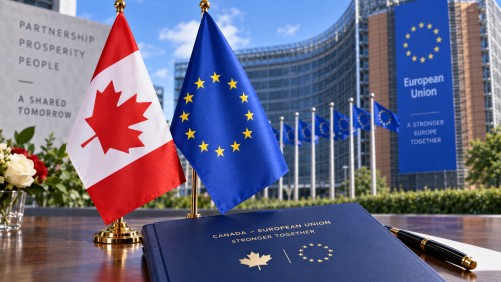
European Commission President Ursula von der Leyen announced the EU’s invitation for Canada to become its first “associate member,” a status that does not currently exist within the EU framework. This proposal aims to broaden cooperation across various sectors, including artificial intelligence, climate policy, and global security, areas where Canada and the EU are already aligned.
The potential for deeper ties between the EU and Canada is underscored by existing agreements, including a trade relationship that could be expanded into a partnership emphasizing economic security and mutual prosperity. Both parties are set to explore further collaboration in energy, critical minerals, batteries, AI, quantum computing, cybersecurity, and defense, reflecting a shared commitment to advancing technology and security.
The timing of this proposal is notable, as Canada and the EU navigate an increasingly complex international landscape, marked by changing trade and geopolitical conditions and heightened tensions with the United States. Canadian Prime Minister Mark Carney has previously emphasized the importance of diversifying Canada’s global partnerships, making this proposed association with the EU a strategic move to reduce reliance on U.S. ties.
While details of the associate membership, such as Canada’s access to EU programs and the single market, are still under discussion, an upcoming summit in October is expected to provide further clarity on the future of the EU-Canada relationship. As both sides deliberate on the practical implementation of this partnership, the proposal signals a shared vision for enhanced cooperation in a rapidly evolving world.