
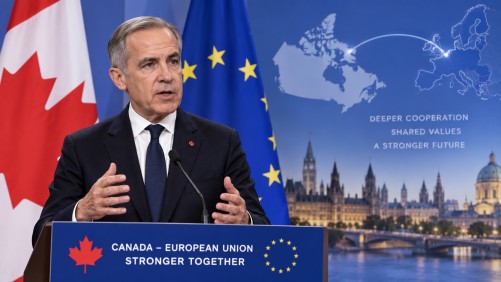
As global trade dynamics shift, the European Union is extending a new proposal to Canada, inviting the country to become its first associate member. The suggestion, aimed at solidifying economic and strategic ties, comes amid ongoing trade tensions involving the United States, Canada, and the EU.
Canadian Prime Minister Mark Carney, speaking at the European Parliament in Strasbourg, expressed a warm reception to the EU’s proposal. He underscored the potential for enhanced cooperation in critical areas such as minerals, energy security, artificial intelligence, defense, space, and digital trade. Carney highlighted that Canada is not pursuing full EU membership but is eager to explore deeper institutional and economic connections.
The initiative was spearheaded by European Commission President Ursula von der Leyen, who envisions elevating the EU-Canada partnership. Currently, the two have existing trade and sectoral agreements, and this new proposal could further expand their collaboration. However, the concept of EU associate membership is unprecedented and not defined in the bloc’s treaties, with some EU nations expressing reservations about the designation.
Carney also proposed expanding youth exchanges and integrating Canadian participation in the EU’s Erasmus+ education and training program as part of this strengthened relationship. These educational initiatives would foster closer ties between Canadian and European youths, promoting cultural and educational exchanges.
While some European countries back the idea of tighter relations with Canada, the proposal has faced criticism from U.S. President Donald Trump. He has warned of potential tariffs should the EU and Canada deepen their ties, reflecting the broader context of strained trade relations among the involved parties.