
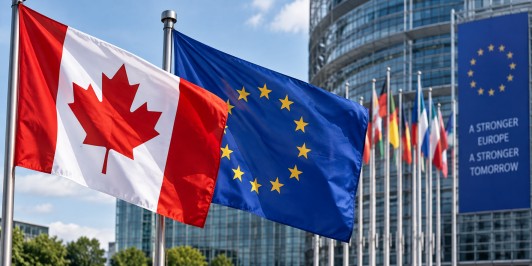
Amid growing trade tensions with the United States, Canada is actively seeking to bolster its economic and strategic connections with the European Union. Prime Minister Mark Carney has engaged in talks with leaders from France, Germany, and Italy, aiming to bring Canada closer to the EU without pursuing full membership. This initiative includes the possibility of an associate membership, which could facilitate enhanced access to the EU’s single market.
The potential collaboration is expected to concentrate on key sectors such as energy, artificial intelligence, critical minerals, defense, technology, and infrastructure. Additionally, Canada is looking to fortify ties in areas like research, higher education, data centers, telecommunications, and satellite networks. As part of these efforts, Ottawa is keen to strengthen energy links with Europe, particularly through infrastructure that might enable Canadian natural gas to reach European markets, thereby assisting in diminishing Europe’s reliance on Russian energy sources.
This strategic pivot is part of Canada’s broader objective to diversify its economy and lessen its dependence on the United States, which currently serves as the destination for approximately two-thirds of Canadian exports. By exploring new avenues for cooperation with the EU, Canada aims to create a more balanced economic portfolio that reduces its vulnerability to fluctuations in the U.S. market.
European nations are cautiously evaluating these proposals. While the prospect of intensified Canada-EU cooperation could unlock fresh economic possibilities, it also risks exacerbating the tension in the already delicate relations between Washington and its European allies. The balancing act for Europe will be to seize the opportunity for economic growth with Canada without undermining its strategic alliances with the United States.