
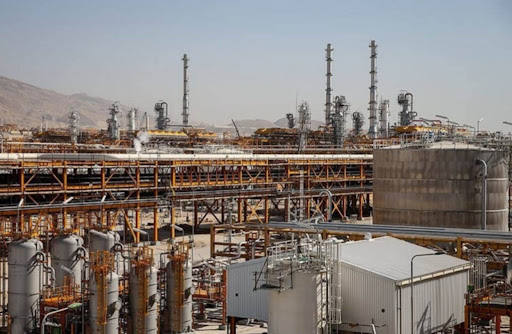
Iran declared what its officials described as the opening of a “full-scale economic war” on Wednesday after Israeli missiles struck the South Pars gasfield, the largest natural gas reserve in the world. The Revolutionary Guards promptly issued threats against energy infrastructure in Saudi Arabia, the UAE, and Qatar, naming specific facilities and calling for evacuations. Oil prices surged toward $110 a barrel in the wake of the announcement.
The South Pars field, jointly developed with Qatar, represents the foundation of Iran’s gas export economy. Reports indicated Israel carried out the strike with explicit US approval, breaking with a policy of leaving Iran’s oil and gas sector untouched. Both countries had previously calculated that sparing Iranian energy infrastructure helped prevent an uncontrollable spiral in global oil prices — a calculation that now appeared to have been abandoned.
Iran’s state media released the names of targeted facilities: Samref refinery and Jubail complex in Saudi Arabia, al-Hosn gasfield in the UAE, and the Mesaieed complex and Ras Laffan refinery in Qatar. Evacuation instructions were broadcast directly to residents and workers in the area. The specificity of the warning and the tight timeframe — “coming hours” — lent it a credibility beyond routine diplomatic posturing.
The oil market’s reaction was immediate and sharp. Brent crude rose to $108.60 a barrel, while European natural gas benchmarks climbed over 7.5%. These gains came atop an already dramatic market disruption: Gulf oil exports had fallen 60% from pre-war levels due to a combination of infrastructure damage and Iran’s effective blockade of the Strait of Hormuz. The threat of attacks on Gulf facilities suggested the worst was not yet over.
Qatar’s Majid al-Ansari warned that attacking energy infrastructure was a threat to the global energy order and regional populations alike. From Tehran to Doha to Riyadh, energy ministers and defense officials were scrambling to assess the situation. The conflict that had already reshaped global energy markets appeared to be entering a far more destructive phase.
