
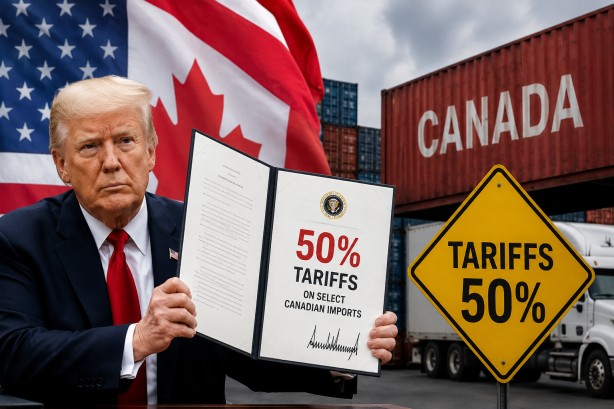
President Donald Trump has taken a decisive step by sanctioning a fresh set of 50% tariffs on selected imports from Canada. This move comes as a response to what he perceives as Canada’s unfair treatment of American goods. The tariffs are set to affect a range of products, including automotive materials, dairy items, and alcoholic beverages. This decision was enacted through executive orders amidst ongoing trade discussions related to the United States-Mexico-Canada Agreement (USMCA).
The Trump administration has justified these tariffs as necessary to counteract what they consider to be discriminatory trade practices that negatively impact U.S. industries. This strategic move is anticipated to intensify the trade negotiations between the U.S. and Canada, potentially influencing market access and trade relations. As these talks progress, the pressure is mounting on both sides to reach a favorable resolution.
Economic ties between the U.S. and Canada could face further challenges due to these new tariffs. The imposition of such duties is likely to add tension to the already complex economic relationship between the two nations. Businesses and exporters are keenly observing the situation, eager to see how Canada will respond and what consequences this might have for trade dynamics in North America.
The introduction of these tariffs is a significant development in the broader context of U.S.-Canada relations, particularly as both countries navigate the intricacies of the USMCA. It remains to be seen how this will affect future negotiations and whether it will lead to any shifts in policy or practice that could reshape the economic landscape between these neighboring countries.