
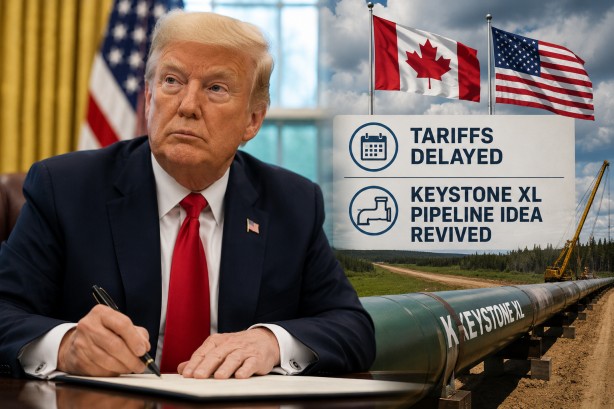
President Donald Trump has postponed the implementation of a proposed 50% tariff on Canadian goods by three days, citing advancements in trade negotiations between the United States and Canada. According to Trump, a trade deal is nearing completion, while Canadian Prime Minister Mark Carney acknowledged that significant progress has been achieved, though additional negotiations are necessary to finalize the agreement. The delayed tariffs, which would impact billions of dollars in Canadian exports, including items like wine and hockey equipment, offer both nations a brief window to conclude their discussions.
In a related development, Trump hinted at the potential revival of the Keystone XL oil pipeline project, suggesting that it “may be awoken from the grave.” However, he did not elaborate on how this initiative might tie into the ongoing trade talks. The Keystone XL pipeline was originally intended to transport oil from Canada’s western production areas to U.S. refineries. The project was put on hold after a critical U.S. permit was rescinded in 2021, following long-standing opposition from environmentalists, landowners, and Indigenous groups.
The latest update in U.S.-Canada relations comes amid a backdrop of tensions that have persisted for months. This period has been characterized by frequent threats of tariffs and subsequent retaliatory measures between the neighboring nations. Despite these challenges, the U.S. and Canada maintain a robust trading relationship, with hundreds of billions of dollars in goods and services exchanged each year.
The proposed tariffs have triggered alarm among Canadian businesses, which fear increased costs and diminished access to the U.S. market. These economic concerns underscore the importance of reaching a mutually beneficial trade agreement that addresses the interests of both countries. As trade talks continue, stakeholders on both sides of the border remain hopeful for a resolution that strengthens economic ties while addressing outstanding issues.