
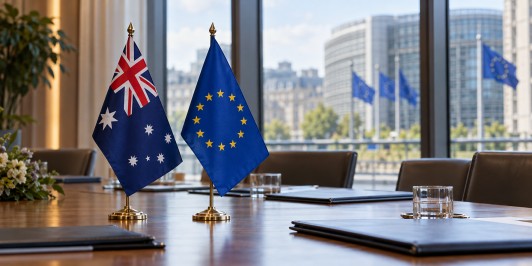
Australia is reconsidering its strategic alliances as it faces growing challenges in its relationship with the United States, its most significant ally. The ongoing US trade war and uncertainties surrounding American defense commitments have prompted Australia to explore the possibility of strengthening ties with Europe. At the same time, Australia remains keenly aware of the importance of maintaining its economic relationship with China.
The European Union’s recent decision to initiate discussions with Canada on closer collaboration has led Australian policymakers to evaluate whether a similar framework could enhance Australia’s strategic and economic cooperation with Europe. This potential pivot towards Europe comes at a time when Australia is navigating complex international dynamics and seeking to diversify its partnerships.
Analysts are closely examining how Australia can expand its diplomatic and economic ties with Europe without compromising its long-standing alliance with the United States. This delicate balancing act would require Australia to carefully manage its security commitments, trade interests, and broader strategic position in the Indo-Pacific region.
Experts suggest that any shift in Australia’s foreign policy would need to consider the implications for its defense strategy and economic priorities. By exploring stronger connections with Europe, Australia could potentially gain greater strategic and economic benefits, while also ensuring that it does not weaken its crucial alliance with the United States.
Overall, Australia’s reassessment of its international relationships reflects a broader effort to position itself advantageously in a rapidly changing global environment. As geopolitical tensions continue to evolve, Australia is weighing its options to ensure that it remains a key player on the world stage while safeguarding its national interests.