
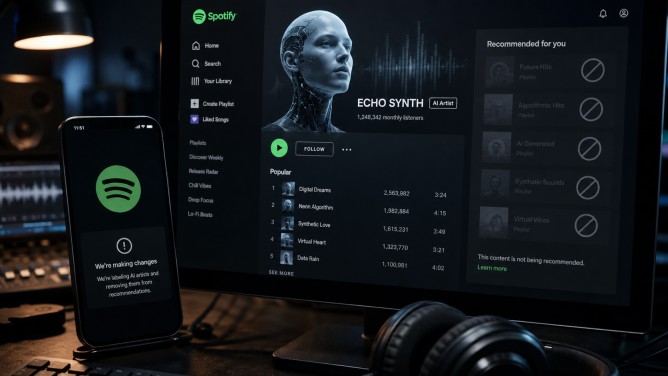
Starting in September, Spotify will begin implementing new strategies to detect and limit the prominence of AI-generated artists on its platform. These AI-created artist profiles and their tracks will be marked with an “AI persona” label, making it clear when a performer is not a real person. This initiative is part of Spotify’s efforts to aid listeners in distinguishing between genuine musicians and those created by artificial intelligence, thereby safeguarding the exposure of authentic artists.
In addition to labeling, Spotify will automatically remove AI personas from personalized recommendation algorithms. This decision underscores the company’s aim to ensure that real musicians do not lose visibility due to the influx of AI-generated content. While artists will have the option to self-report their AI-generated status, Spotify plans to employ both human reviewers and AI tools to identify any undisclosed AI personas on the platform.
The introduction of these measures comes in response to the rapid proliferation of AI-generated music. Spotify has revealed that it removed 75 million spam tracks over the past year, which highlights the increasing volume of artificial and low-quality music being uploaded to digital music services. This statistic illustrates the magnitude of the challenge that platforms like Spotify face as they strive to maintain a high standard of content.
As generative AI becomes more prevalent in the music industry, Spotify emphasizes the growing importance of transparency. Listeners are increasingly interested in knowing whether the creator of a track is an actual person or an AI-generated entity. By clearly identifying AI personas, Spotify aims to meet this demand for transparency and provide its users with a more informed listening experience.