
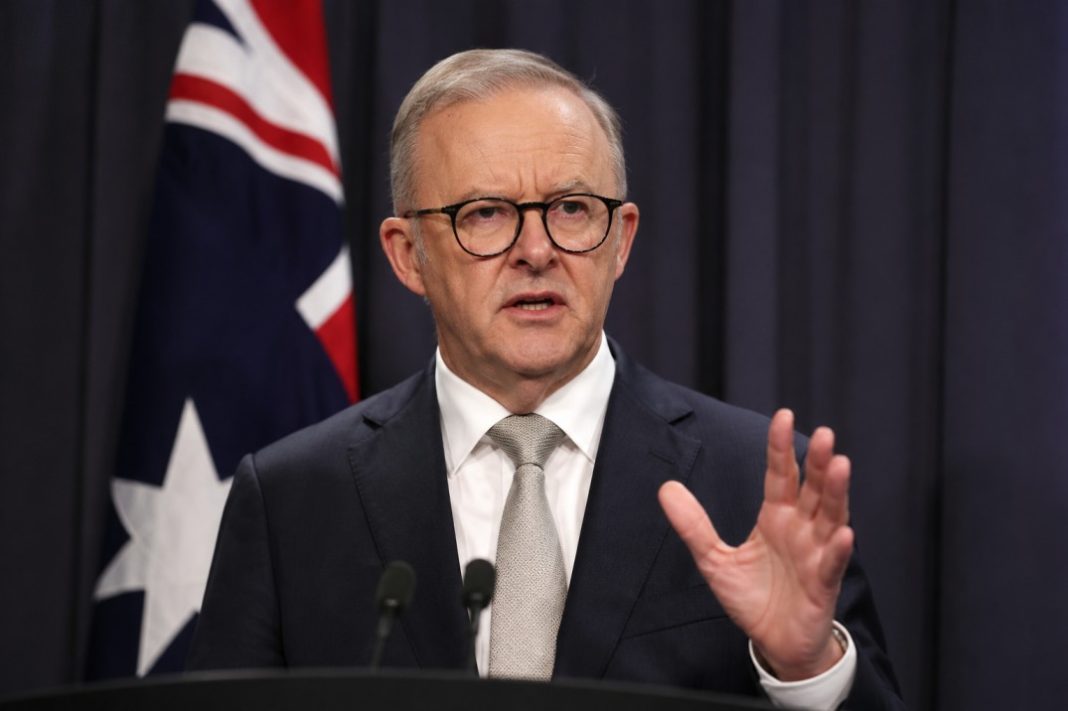
In a pointed rebuke to China, Australian Prime Minister Anthony Albanese has condemned a recent test of a nuclear-capable intercontinental ballistic missile (ICBM) conducted over the Pacific Ocean. Albanese expressed grave concerns about the missile, which was launched from a nuclear-powered submarine and equipped with a dummy warhead, highlighting its potential for widespread devastation if armed with a nuclear payload. He emphasized the need for de-escalation in the region, advocating for a reduction in nuclear arsenals and vowing to continue addressing these issues with Beijing.
Albanese’s remarks came during his visit to the Solomon Islands, where he characterized the missile test as an aggressive maneuver that could destabilize the Pacific region. Joining him in denouncing the test, Solomon Islands Prime Minister Matthew Wale called on major powers, including China and the United States, to refrain from conducting missile tests in the Pacific. Wale urged these nations to focus on building partnerships with Pacific countries rather than posing security threats.
China, for its part, defended the missile test as a standard military exercise carried out in compliance with international law. The Chinese government claimed that it had notified neighboring countries beforehand and maintained that the exercise was not directed at any particular nation. Nonetheless, Australian officials dismissed this explanation, arguing that the advance notice was inadequate and the test did not adhere to internationally accepted protocols for ballistic missile launches.
The incident has sparked criticism from multiple countries, with increasing apprehensions about escalating military activities in the Indo-Pacific region. Observers fear that such actions could heighten regional tensions and potentially usher in a new era of strategic rivalry. As nations in the region navigate these challenges, the call for diplomatic engagement and cooperation remains paramount to maintaining peace and stability.